The breakwater does one job: it makes the water behind it flat enough to work in. Everything about it is shaped by the sea it is meant to break — the mass of it, the slope on the seaward face, the fact that it runs out from the shore rather than standing offshore on its own.
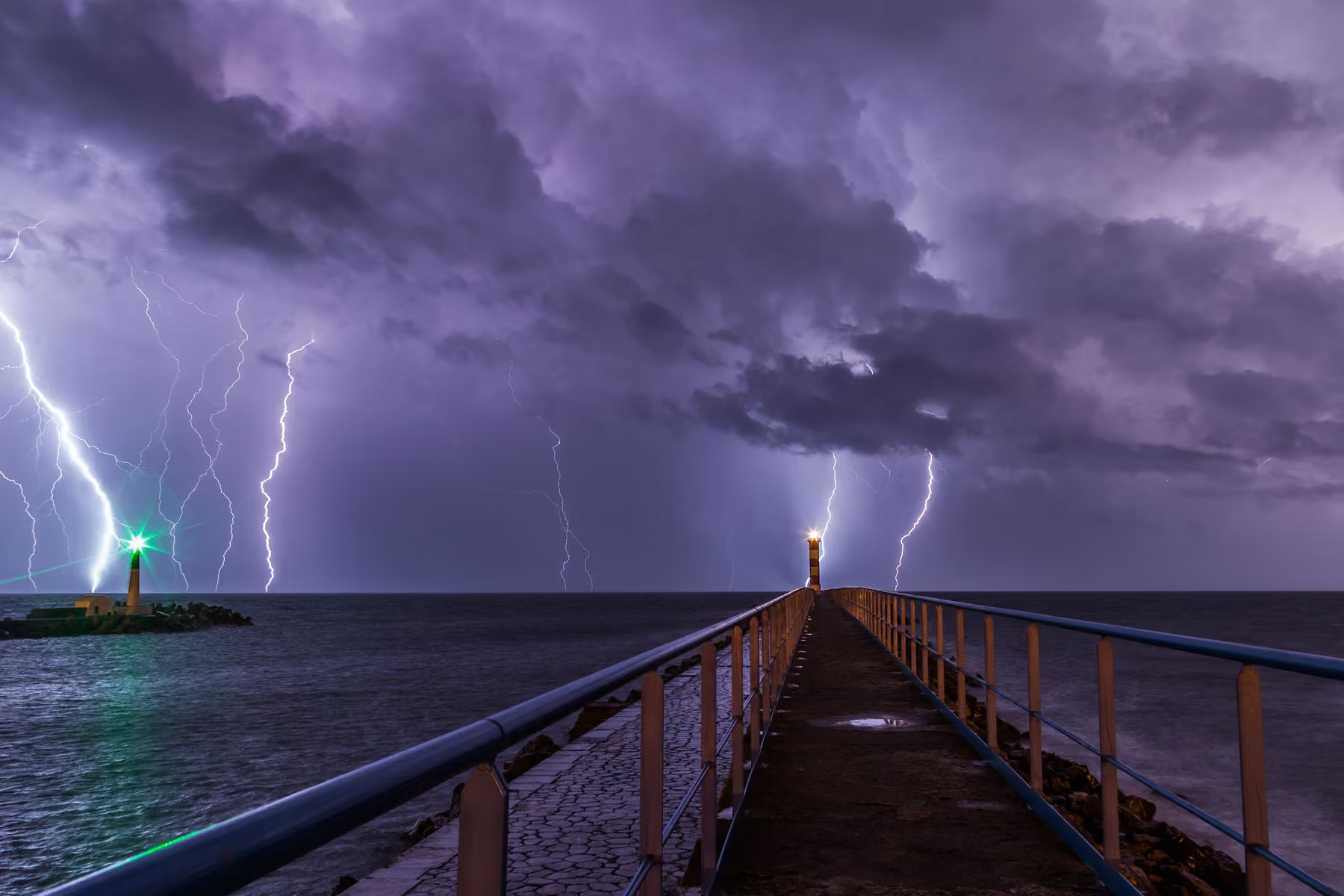
In this photograph none of that is visible. The storm is.
A long exposure collects every stroke that falls during the time the shutter is open, which is why the sky in the frame carries more lightning at once than anyone standing on the mole would have seen. The picture is accurate about the night and inaccurate about the instant, and photographers have been making that trade since the shutter was invented.
What the exposure also does is turn moving water into a flat grey surface. The sea in the frame looks calmer than the sky, which is the opposite of what it was.
The light at the end of the mole is the fixed point. It is on a timed character, flashing at an interval a navigator can count, and it was flashing through all of this.