A conventional island ferry is a lorry park with a passenger deck on top. It is slow, it is cheap to run, and it exists to move vehicles and freight; the passengers are along for the ride.
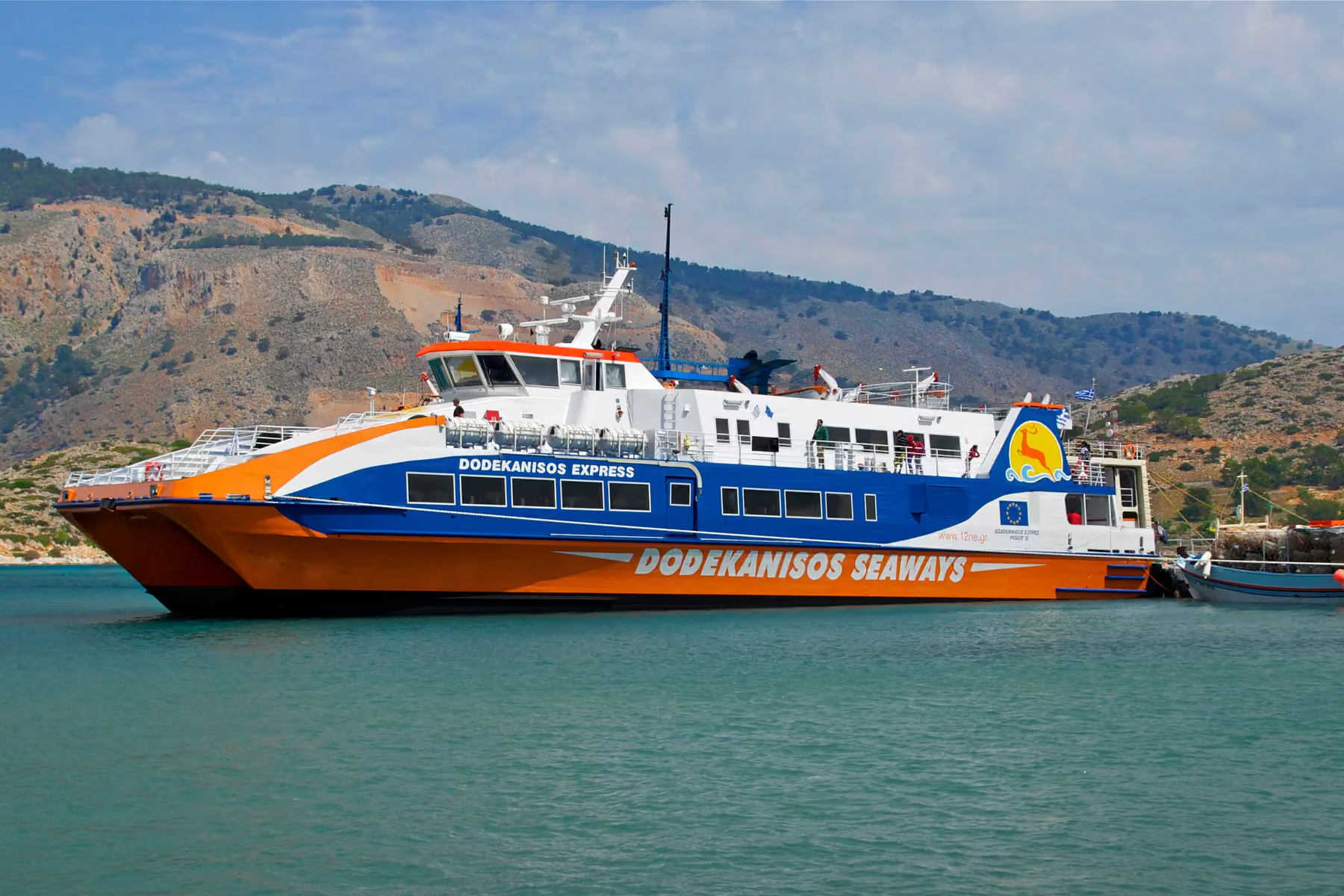
A high-speed catamaran is the opposite trade. Two slender hulls reduce wave-making resistance enough to roughly double the speed, and the price is fuel, a limited sea state and almost no capacity for vehicles.
That trade only pays where the value being sold is time. In an archipelago where a chain of islands would otherwise be a full day apart, it pays: a route becomes a day trip, a hospital appointment becomes possible and back, a delivery arrives the same morning.
The cost of it shows in the picture. The vessel is moored at a jetty in a bay with a monastery and a hillside and nothing resembling a terminal. There is no marshalling yard because there are no vehicles. Everything that comes ashore here is carried.