Most cargo ships arrive expecting the shore to do the lifting. A container terminal supplies gantries; a grain terminal supplies elevators and spouts. The ship brings the cargo and a place to put it, and nothing else.
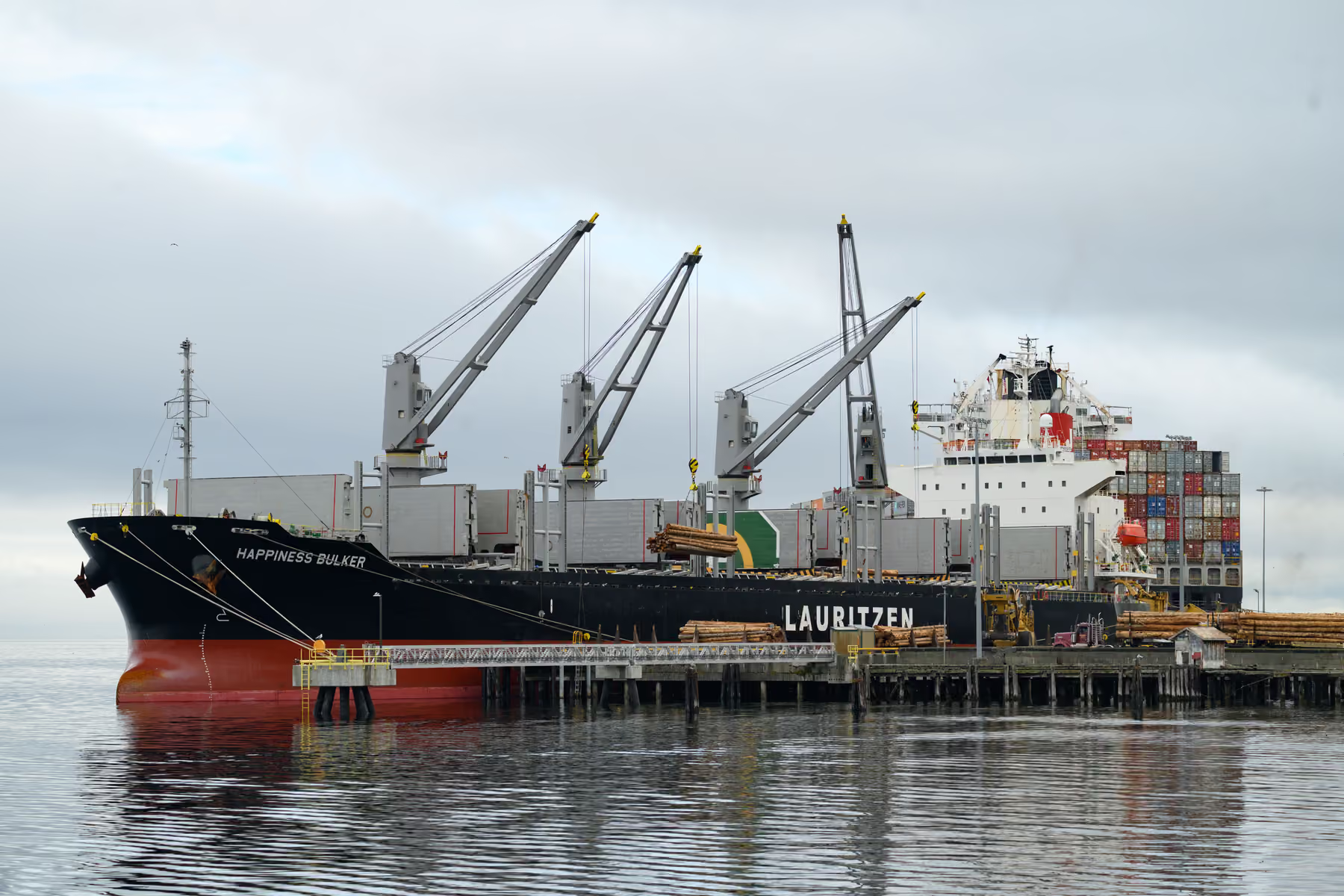
A self-discharging bulk carrier brings the machinery too. The booms folded along the deck in this photograph are not lifeboat davits or spare gear. They are the discharge arrangement: conveyors running under the holds, a boom that swings out over the quay, and a rate of flow that does not depend on what the port owns.
Why it matters where there is nothing
The arrangement costs cargo capacity. Everything the ship carries to unload itself is weight and volume that could have been cargo, and it has to be maintained by the crew rather than by a terminal’s engineers.
What it buys is a much longer list of places the ship can call. A berth with a bollard, enough water and a road behind it becomes a working port. For aggregates, coal, cement and woodchip — cargoes that move in large quantities to places that handle them a few times a year — that is the whole business case.
The picture
The vessel sits high in the water, which is the ordinary look of a bulk carrier that has discharged or has not yet loaded. The booms are stowed rather than working, so the frame shows the equipment at rest, which is when it is easiest to read.
Behind it the quay is bare. That is the point of the ship.