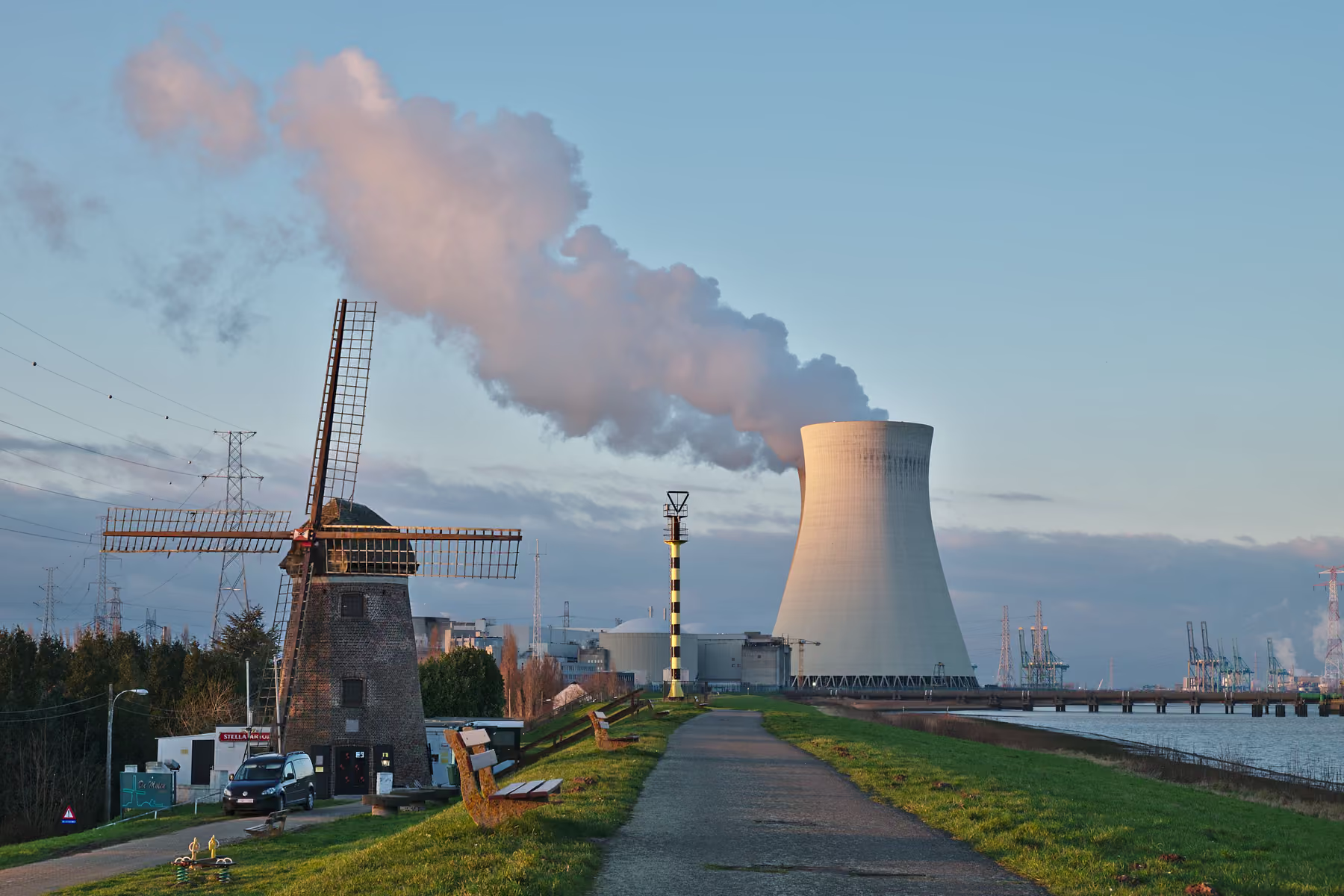
A thermal power station turns roughly a third of its fuel into electricity. The rest is heat, and the heat has to go somewhere that is not the inside of the plant.
Where a cooling tower is not used, the somewhere is a body of water. The plant draws cold water in at one end, runs it through the condensers, and returns it warmer at the other, and the water body has to be large enough to shed that heat before it comes round again.
Reservoirs built for this are not incidental scenery. Their size, depth and shape are part of the plant’s specification, and the distance between the intake and the outfall is set so the warm return does not short-circuit back to the inlet.
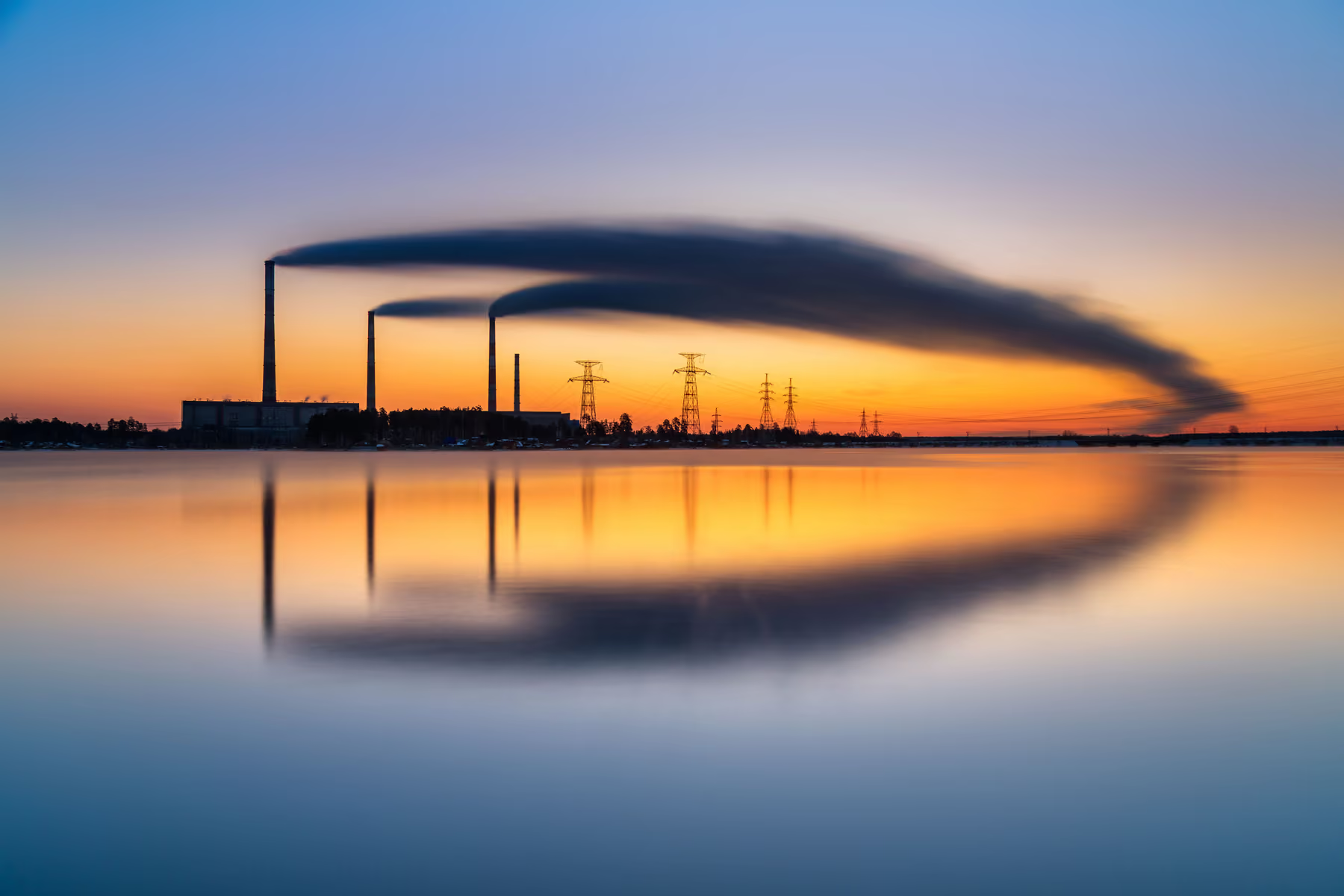
The reflection in the photograph is doing something useful. A still surface means little wind, and little wind means slower heat transfer from water to air — the condition under which a cooling reservoir is closest to its limit.
The plumes are condensed water vapour, not smoke, and they are vertical for the same reason the reflection is sharp.